


 fr
 en
 it
 es
 pt
 ar


If you are looking for a suitable entrance door, you will likely encounter two common options: pivot doors and traditional hinged entrance doors.
Their load bearing structure, installation requirements, sealing performance and maintenance needs are totally different. In this guide, we break down every practical factor so you can confidently decide which one fits your project.
What Is Pivot Door?
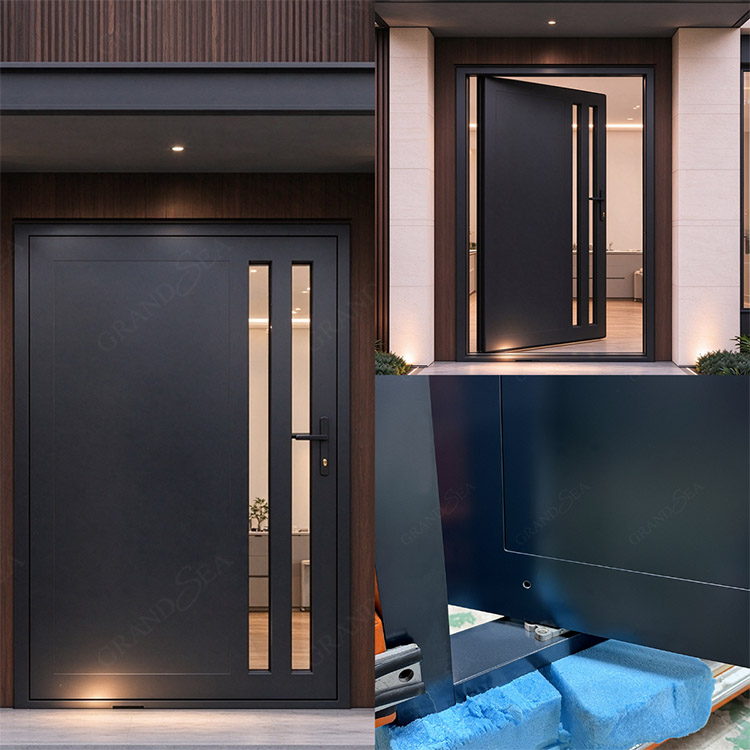
Pivot door rotates around an offset vertical axis. Instead of hinges attached to the door edge, heavy-duty pivot hardware is fitted at the top header and bottom floor slab.
The weight of the entire door panel transfers straight down to the floor, rather than hanging on the side frame. This unique mechanism allows pivot doors to support oversized, extra-heavy single slabs that regular hinged doors cannot handle.
Most modern pivot doors use concealed hardware, delivering a clean, flush, floating look for luxury residential facades.
What Is Hinged Entry Door?
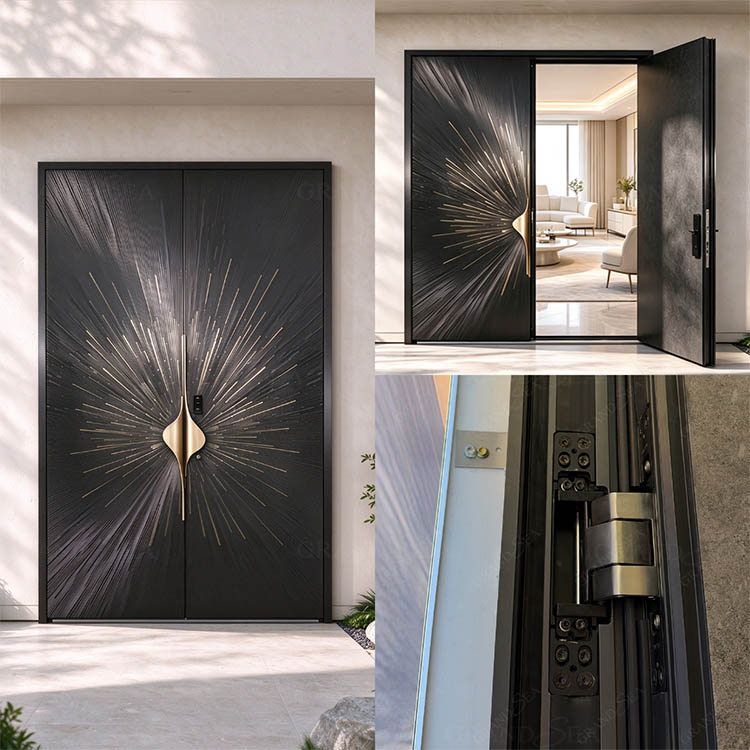
The hinged entry door is the classic standard front door you see on most homes. Multiple hinges are mounted along one vertical edge, connecting the door slab to the side frame.
All weight of the door rests on these edge hinges. It is a mature, widely adopted design with simple installation, reliable sealing and easy replacement of spare parts.
Hinged entry doors come in all styles, It is a safe, proven choice for most residential openings.
Core Differences to Compare
1.Load Bearing and Available Sizes
• Hinged Entry Door
Hinges have clear weight limits. For stable long term performance, hinged doors work best within standard residential dimensions, usually below 1.2 m wide and 2.7 m tall.
If you make the slab too large or heavy, side hinges will wear out quickly. Over time, the door sags, sticks, fails to lock smoothly and creates air gaps around the frame.
• Pivot Door
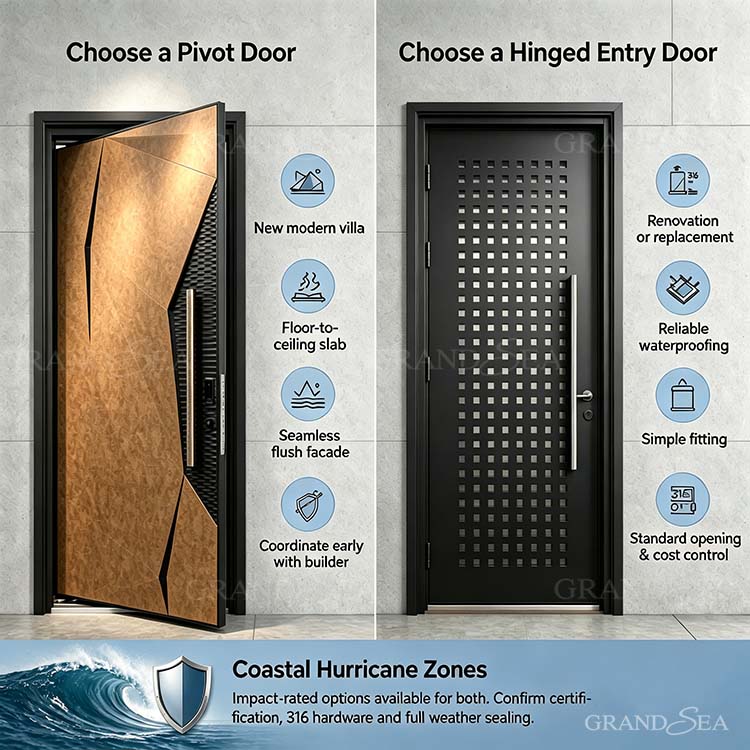
Supported by the floor bearing system, pivot hardware can carry very large and heavy panels. Custom floor-to-ceiling pivot doors of 3 m to 4.5 m in height are common for villa projects.
You can create one seamless, wide single slab with large glass inserts, which is nearly impossible for standard hinged doors. This is the biggest advantage of pivot doors for architectural designs.
2. Appearance and Curb Appeal
• Hinged Entry Door
Hinges are visible along the door edge. Frames follow standard rebate profiles. There are countless style options, but the look is less dramatic. It blends naturally with most home styles without becoming a standalone design statement.
• Pivot Door
All operating hardware stays hidden. No exposed hinges break the continuous flat surface. Slim frames and flush designs create a premium, high-end aesthetic.
A pivot door becomes the focal point of your facade. It is the top pick for modern villas, architect designed homes and luxury renovation projects.
3.Weather Sealing, Thermal and Hurricane Performance
• Hinged :Classic rebated frame + continuous EPDM compression seal. Stable air and water tightness, easier to pass hurricane and energy certifications.
• Pivot :Sealing is technically more challenging. It uses drop bottom seals + perimeter compression brushes/seals.
♦ Important note:Only engineered thermal-break aluminum pivot doors with full sealing system can reach good U-value and NOA hurricane rating. Not all pivot doors are storm ready.
4.Installation and Renovation Compatibility
• Hinged :Standard opening, simple install. Most local installers can handle. Perfect for old door replacement / retrofit renovation.
• Pivot :Must plan early during construction. Floor pivot base needs to be embedded into concrete slab before flooring. Small installation tolerance, installers need pivot door experience. Hard to retrofit on existing old openings.
5. Hardware and Maintenance
• Hinged :Simple maintenance, lubricate hinges occasionally; spare parts easy to source.
• Pivot :Bottom spindle bearing is the wearing core part. For salt-air coastal islands, 316 stainless pivot hardware is mandatory to resist salt corrosion. Need regular inspection and lubrication。Poor hardware leads to sticking and jamming.
6.Budget
• Hinged :Lower cost for standard sizes, ideal for regular homes, rental, budget renovation.
• Pivot :Premium cost. Heavy-duty pivot hardware, custom oversized slab, precision fabrication and professional installation push price higher.
Quick Comparison Table
| Feature | Pivot Door | Hinged Entry Door |
| Rotation System | Offset vertical axis, top and bottom pivot spindle | Side mounted edge hinges |
| Weight Support | Floor bearing, supports extra-large heavy slabs | Side frame bearing, limited size |
| Look | Fully concealed hardware, minimalist flush design | Visible hinges, versatile classic styles |
| Sealing System | Drop seal + perimeter engineered seals | Rebate compression EPDM seals |
| Installation | Pre construction slab cutout required | Simple, suitable for retrofit replacement |
| Price | Premium | Cost effective |
FAQ
Q1: Can pivot doors be hurricane impact rated?
Q2: Can I replace my old hinged door directly with a pivot door?
Q3: Are pivot doors less energy efficient than hinged doors?
CTA
We Grandsea supply custom pivot doors and hinged entry doors, including hurricane impact versions. Send your opening size, drawings and design ideas for your custom quotation.

